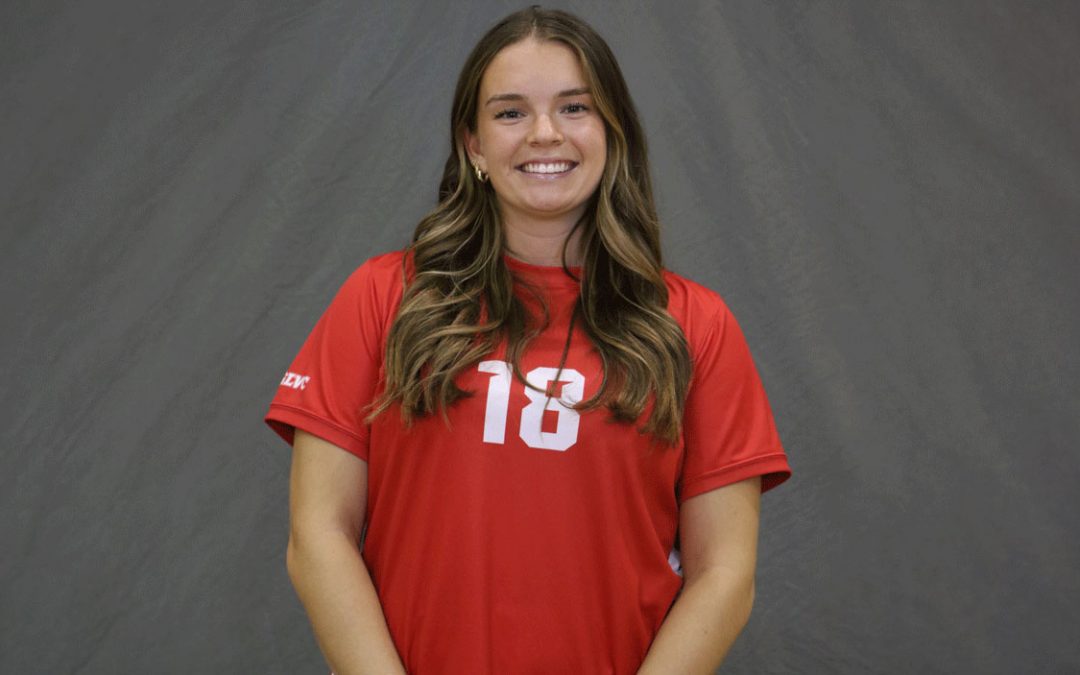
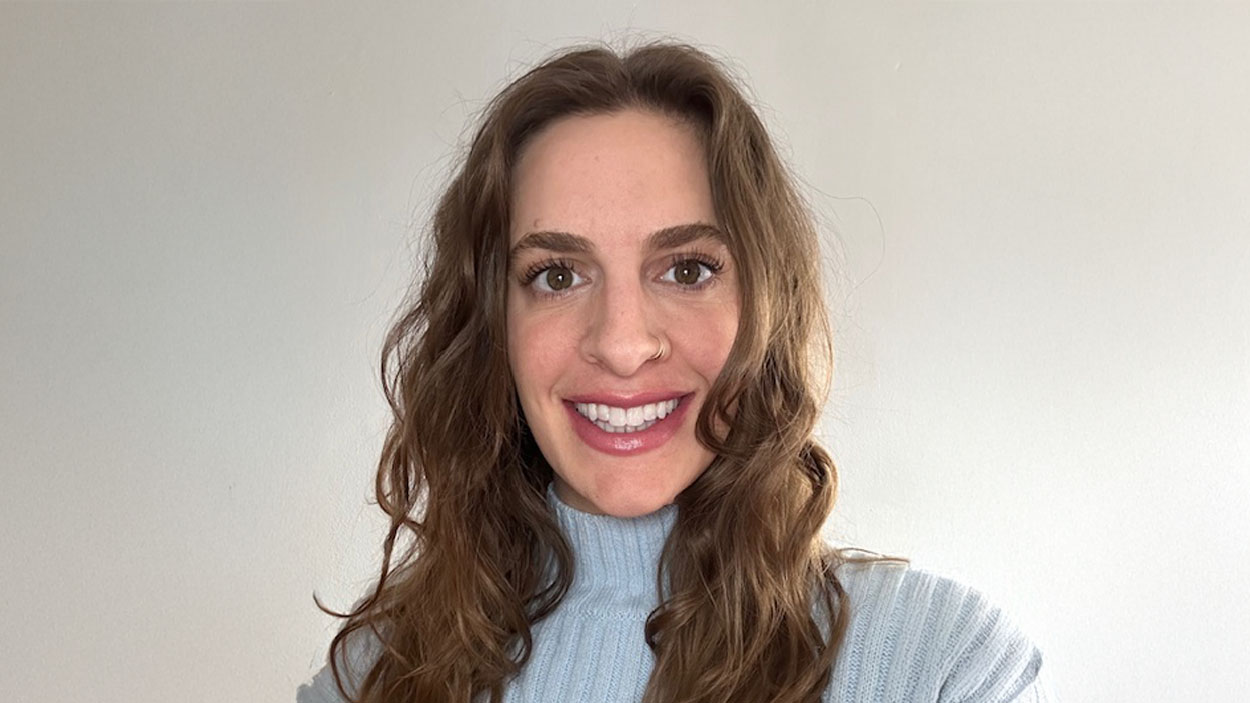
Emily Leone recently earned her DNP from UMSL’s College of Nursing. Her project looked at implementing a toolkit to increase HPV vaccinations postpartum. (Photo courtesy of Emily Leone)
Even four months later, Emily Leone still smiles thinking about walking across the stage during the pinning ceremony for the University of Missouri–St. Louis College of Nursing in August. Leone, who earned her Doctor of Nursing Practice, also received an award for her project, “Implementation of a Human Papillomavirus Vaccination Toolkit Postpartum,” and was shocked and humbled to be nominated.
“The thought that my work was profound enough to be mentioned is very lovely,” Leone said. “When I started this quality improvement project, it was very intimidating. I had never done anything like it before. I had no idea, really, what I was doing. But now that I’ve been through it, I’ve had a lot of fun. I really made a big impact and got people vaccinated. My patient population has been positively impacted because of it, and that sits really well with me. I’m excited to continue quality improvement work in the future, wherever I end up.”
Although she’s now incredibly passionate about nursing – and, more specifically, women’s health – Leone didn’t always know she’d end up in the field. When she graduated with her bachelor’s degree in psychology from Marquette University in 2013, she wasn’t exactly sure how to use her degree. She wound up volunteering with AmeriCorps, through the City Year program, which took her to Denver, Colorado. There, she fell in love with nursing.
“I knew after that AmeriCorps program, I wasn’t cut out to be a teacher, so I kind of looked elsewhere at how I could positively impact my community,” she said. “And nursing definitely fit the bill.”
Leone moved on to an accelerated nursing program at Regis University, which helped her realize she wanted to be a labor and delivery nurse. She held out for a labor and delivery position in Denver and has now been working in labor and delivery nursing for almost 10 years, having held positions at several hospitals in Denver as well at Barnes-Jewish Hospital back in her hometown of St. Louis.
“Throughout that time, I have always been passionate about women’s health, but I became even more devoted to it,” she said. “I love my patient population. I love the providers I work with. It’s been a really wonderful experience. But after five years of L&D nursing, I realized that I wanted my impact to be grander. I was ready to kind of leave the bedside. I really have loved being a birth worker, but I wanted to sort of extend my gifts to the whole lifespan of a woman, from adolescence all the way through perimenopause and post-menopause.”
Leone’s search to have a greater impact in the field of nursing eventually led her to the DNP Program at UMSL’s College of Nursing. Many of her colleagues at Barnes had been through the program and spoke highly of it. She applied on a whim and was accepted.
Leone started the DNP program in 2021 during the COVID-19 pandemic, so her first orientation was held online instead of in-person. Since the program itself is primarily online, she had to be very self-motivated and good with time management but quickly found camaraderie within her cohort. Although the courses were challenging – especially for students who are still working full-time – she also found support from Assistant Teaching Professor and Women’s Health Program Coordinator Charity Galgani.
“She was my cheerleader and such a great support throughout the whole program,” Leone said. “Her unwavering support was really crucial to us finishing strongly. Every day, as I was learning, I was kind of reminded, ‘Yes, you are on the right path, Emily. This is what you’re meant to do, and you’re doing it.’ It was really a nice, heartwarming, warm and fuzzy kind of feeling.”
Leone landed on her DNP topic – a human papillomavirus vaccination toolkit – after speaking with some of the providers she worked with at Barnes who had recently been approved for a grant to receive HPV vaccines for the first time. One physician in particular was looking for RN assistance to encourage patients and nurses to discuss and learn about administering HPV doses.
“I came up with this idea, the HPV toolkit, to first of all let patients and providers know that we had access to the vaccine and then provide education for them,” Leone said. “What is HPV? Why do we want to be protected against it? How safe is the vaccine? How effective is it?”
Leone used a handout approved by the American College of Gynecology to easily explain the bullet points of the HPV vaccine to both patients and providers and presented the project as part of routine postpartum care. Since pregnant women typically aren’t given vaccines, Leone wanted to seize the opportunity while they were still in the hospital after giving birth to administer the HPV vaccine while certain barriers, such as transportation cost or lack of information, were not present.
While the HPV toolkit proved statistically insignificant, as hospital physicians began offering the HPV vaccine to eligible patients prior to implementation of the remaining interventions due to IRB approval of Leone’s project, the number of patients receiving the HPV vaccine was still far above the national average of 39.9% vaccination rate among 18- to 26-year-olds. Through the project, 25 women who otherwise would not have been vaccinated received the HPV vaccine.
Leone believes her project speaks to the importance of provider-patient communication, making implementation of HPV vaccines a standard part of postpartum care and staying up to date with research.
“Patients really trust their providers,” she said. “If their provider is suggesting something, they are prone to listen and consider it more than not. The HPV vaccine is the only vaccine that has been proven to prevent cancer, and that is huge. Having discussions with patients and talking about if there are any qualms or any holdups that they have with receiving vaccines, having respectful discourse is kind of everything there is to nursing.”
Leone, who graduated with her DNP in August and recently passed her board certification exams, is currently interviewing for nurse practitioner positions at several OBGYN clinics. She’s excited to start getting more clinical experience working as a women’s health nurse practitioner, but the DNP program has also helped her discover her passion for advocacy work.
“The DNP program as a whole has definitely lit a fire in me for patient advocacy and also nursing advocacy,” Leone said. “I think oftentimes nurses are given fewer resources and the patient-to-staff ratios are not great. We’re used to getting creative and doing the best with what we’ve got, but I am definitely really passionate about empowering nurses to ask for what they need. I’m also very passionate about doing the same for patients. I think it’s all about active listening and really creating community and fostering that.”