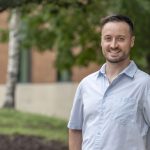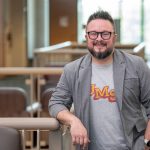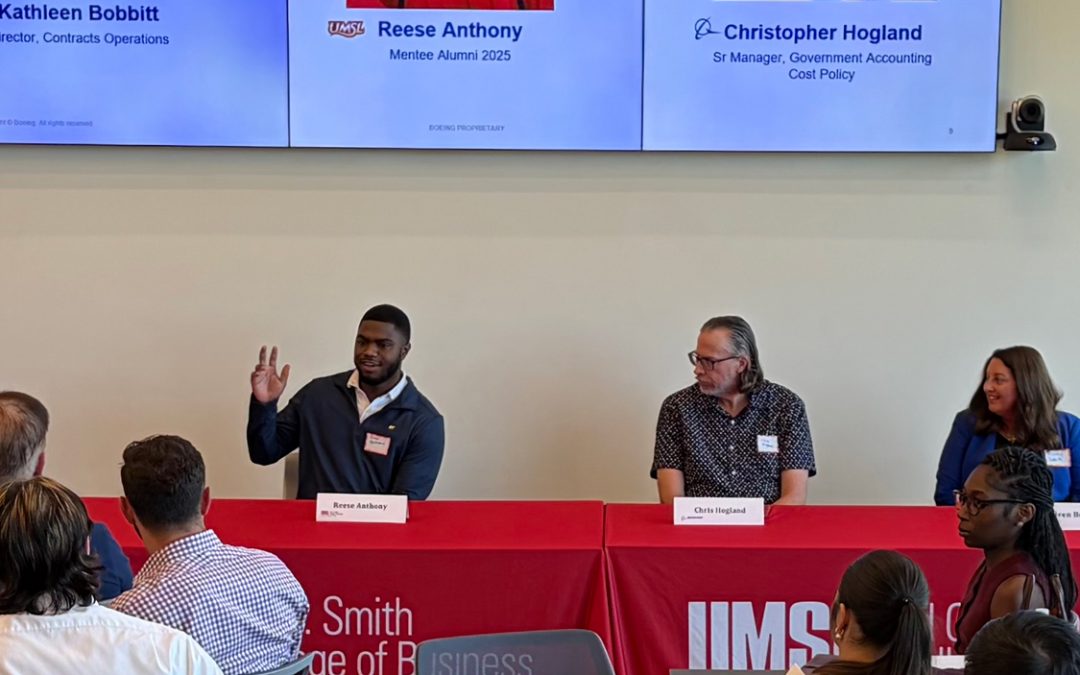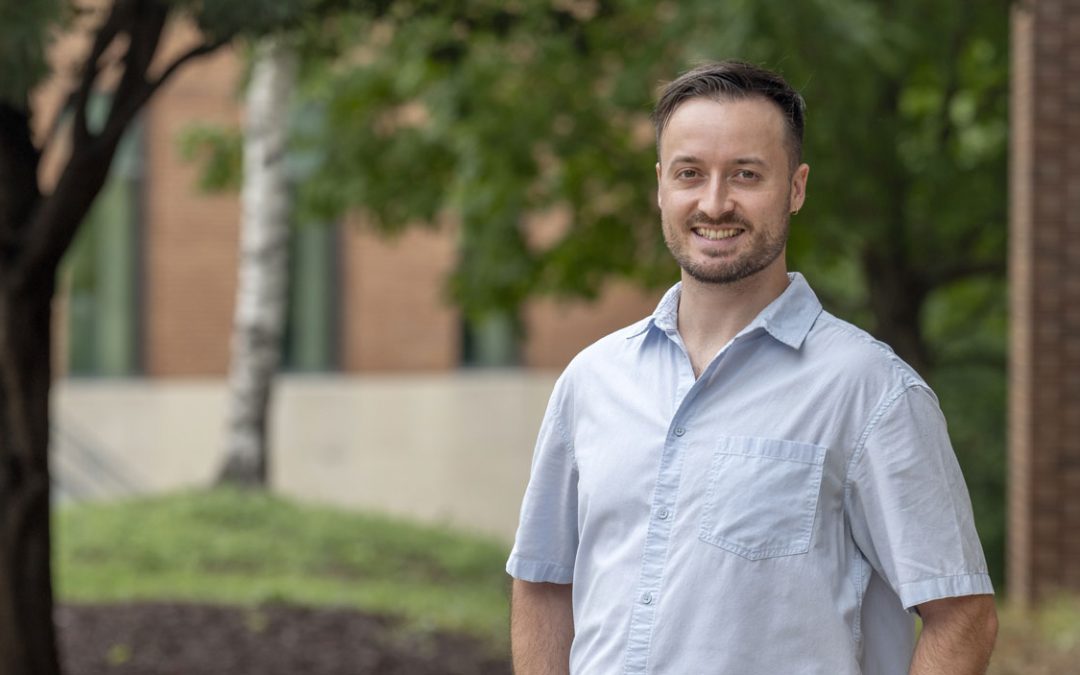
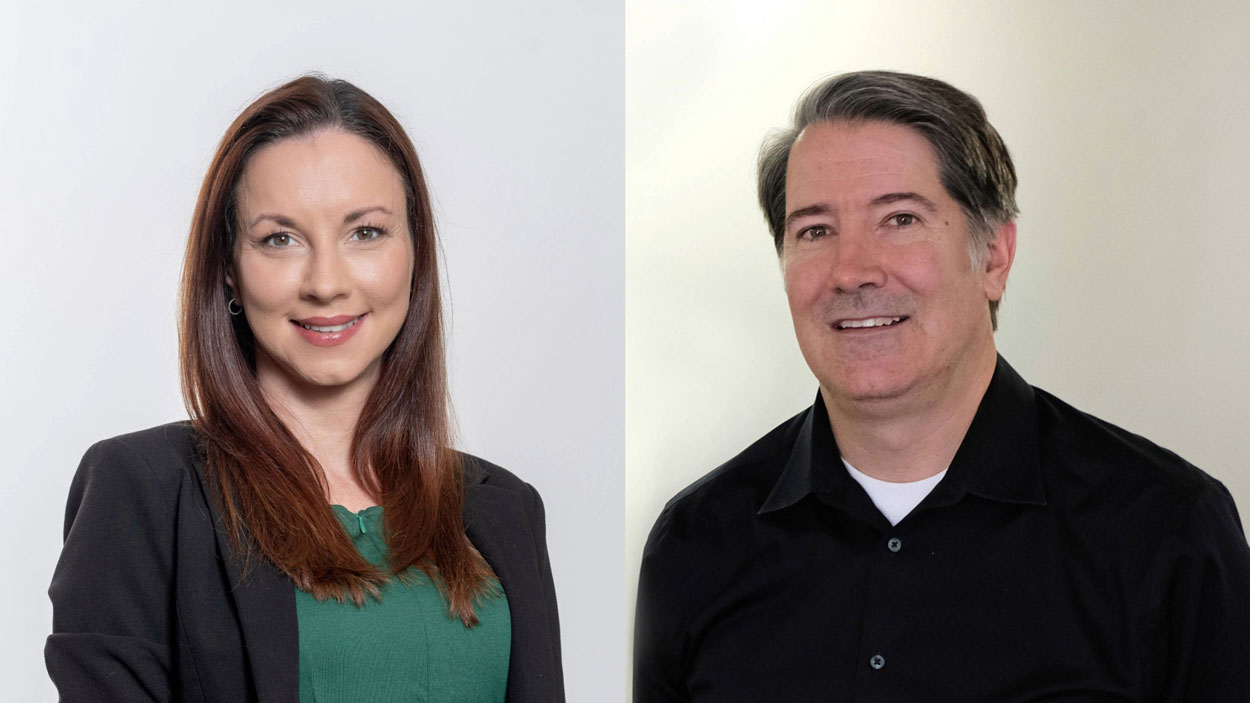
UMSL political scientists Anita Manion and David Kimball discussed their research on vote centers during a webinar cosponsored by the nonpartisan Center for Election Innovation and Research and the Elections Group. (Manion photo by Derik Holtmann; Kimball photo by August Jennewein)
St. Louis County voters have had the option of voting inside the Millennium Student Center at the University of Missouri–St. Louis for municipal, primary and general elections since 2022.
The MSC is one of the dozens of vote centers in St. Louis County where residents from anywhere in the county have the option to cast their ballots on Election Day. It has also been a satellite location for in-person absentee voting in the weeks before.
During some of the bigger elections, with greater turnout, UMSL political scientists Anita Manion and David Kimball have taken advantage of the proximity of the MSC and the opportunity it provides to conduct a little informal research, not about specific races but rather to hear how the process of voting is functioning at a vote center. They’ve been especially interested in how the experience compares to that of a traditional neighborhood-based precinct model, where each voter is assigned a specific voting site to cast their ballots.
“David and I talk to people and, you know, get a feel,” said Manion, an assistant professor in the Department of Political Science. “They have explicitly said, ‘Oh, this feels safer.’ At our campus, you’re waiting indoors. They like that. With the Metro, public transportation goes right there. They like that.”
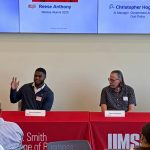
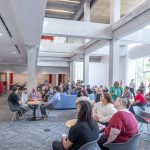
Manion was relaying those responses Tuesday afternoon to an audience of more than 200 local election officials from around the country during a webinar cosponsored by the nonpartisan Center for Election Innovation and Research and the Elections Group. It was held as part of the Books & Ballots Series, which aims to connect researchers with real-world practitioners, translating academic insights into the day-to-day work of election officials.
The hour-long panel discussion also featured a pair of local election officials, Scott Jarrett, an elections director for Maricopa County in Arizona, and Eric Fey, a director of elections for St. Louis County and an UMSL MPPA graduate.
Manion didn’t just share anecdotal data she picked up while milling about outside the Century Rooms of the MSC. She also discussed more formal research she and Kimball have been conducting since June with the support of a grant from the Election Trust Initiative and Pew Charitable Trusts.
With help from political science PhD student Jake Shaw, who has served as a research fellow on the project, Manion and Kimball have built a database of 625 jurisdictions in 19 states serving over 69 million voters that are currently using vote centers instead of requiring voters to cast their ballot at an assigned precinct polling place. They have also been looking at the impact of vote centers on voter participation.
Both Jarrett and Fey described some of the benefits they’ve experienced moving away from precincts to vote centers, including the need to hire and train fewer poll workers by reducing the number of voting locations. They’re also able to be more adaptable, so that if something goes wrong at one location – maybe a fire alarm, a power outage or even simply long lines on Election Day – they’re able to direct voters to other nearby locations where they can cast their ballots.
Jarrett and Fey say they have also been able to be more strategic about where they put polling locations.
“In a precinct-based environment, a lot of the work on identifying where is developed when you’re developing the precincts, and sometimes there ends up being a lot of politics involved in that,” Jarrett said. “With vote centers, you end up removing a lot of the politics, and it really allows you to use data to drive where those locations are. So, you can use turnout history from where those in-person voters live, right? And once you have more and more data, you can find out, ‘Well, where do those in-person voters vote?’”
Manion and Kimball have also surveyed voters in both St. Louis County and Fresno, California, to gauge their experiences.
“From our surveys, vote centers are very popular,” said Kimball, a Curators’ Distinguished Professor and chair of the Department of Political Science. “They’re equally popular and liked by Republicans and Democrats. I don’t want to jinx things, but I think the resilience piece is very powerful. And I think there are features of both centers that appeal to both sides of the aisle – efficiency, maybe cost reductions, access, a whole variety of features that I think appeal to different folks. I know a lot of election features are very politically contested and partisan, but this seems to be one that’s not.”
In addition to Tuesday’s webinar, Manion, Kimball and Shaw led a workshop on vote centers for about 25 elections officials in Missouri last month in Columbia, Missouri. They are also scheduled to present their research during the Annual Meeting of the Southern Political Science Association, which will be held from Jan. 14-17 in New Orleans.