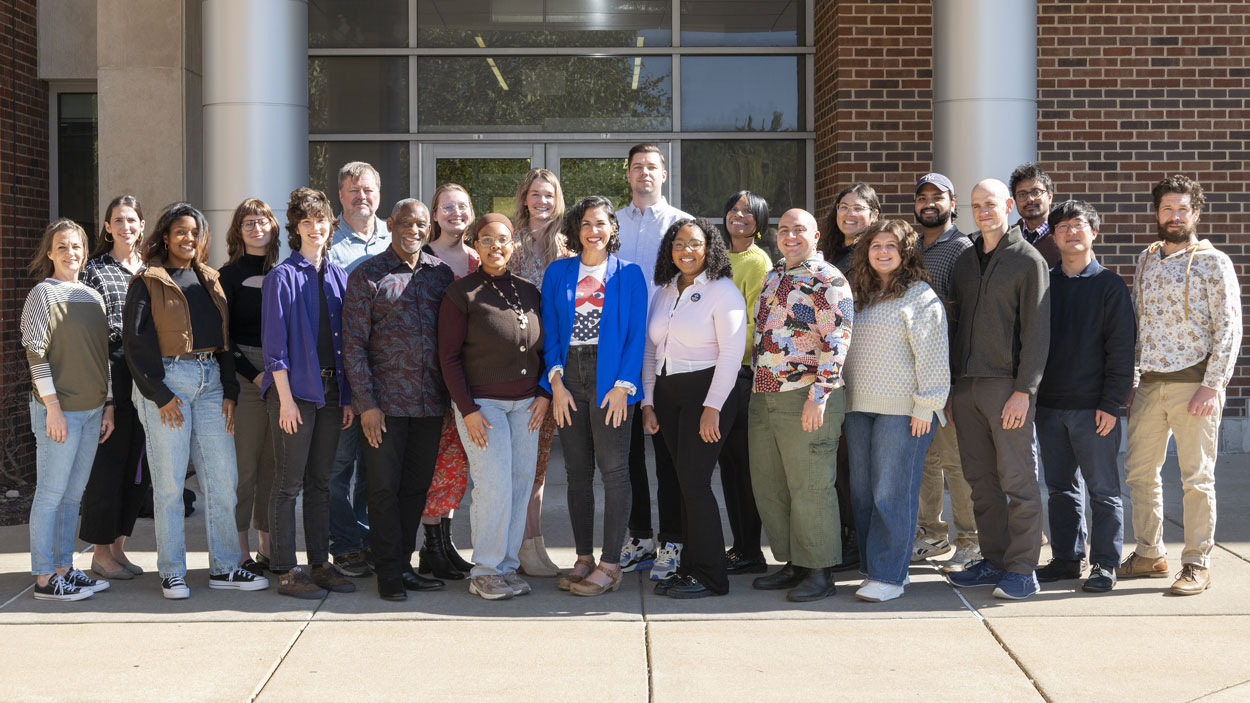
Members of the UMSL Addiction Science Team are expanding their efforts to combat the overdose crisis with the launch of the St. Louis Medication Access Project, which will provide medication lockboxes and transportation assistance to individuals seeking treatment through a grant from The Cigna Group Foundation. (Photo by Derik Holtmann)
The University of Missouri–St. Louis Addiction Science Team has been awarded a $250,000 grant through The Cigna Group Health Equity Impact Fund by The Cigna Group Foundation, the philanthropic arm of The Cigna Group.
 This funding will support the creation of the St. Louis MAP – Medication Access Project – that aims to reduce barriers to methadone treatment for opioid use disorder by providing individuals seeking treatment with medication lockboxes and transportation assistance, including bus passes and rideshare vouchers.
The project is focused primarily on communities in St. Louis where overdose rates are highest, and it aligns with The Cigna Group Foundation’s goal of strengthening community-based programs designed to reduce long-standing health disparities and expand access to essential resources for underserved populations.
“We are really grateful to The Cigna Group Foundation for this funding,” said Rachel Winograd, who leads the UMSL Addiction Science Team and serves as an associate professor and principal investigator within psychological sciences and the Missouri Institute of Mental Health. “This allows us to build on some informal activities and community partnerships that we’ve had in recent years to make something more rigorous and robust that we can actually plan out intentionally and draw solid learnings from.”
Winograd has been directing statewide efforts to combat the overdose crisis for nearly a decade. She and her colleagues on the Addiction Science Team are committed to expanding access to medical treatment and harm reduction strategies to assist people battling opioid and other drug use disorders. The team has helped increase the availability of naloxone across the state to respond to instances of overdose and have also been able to identify gaps that make it challenging for individuals to access the treatment they need, including transportation and requirements by clinics that patients have lockboxes for medication.
“There are so many barriers associated with methadone treatment, but there are some that feel very tangible and addressable,” Winograd said. “Our work is about reducing as many barriers as we can at as many levels as we can, whether that’s structural with the state or federal policy, whether that’s provider level with individual clinics or the people who work within them, or at the patient level, about their own awareness, knowledge, attitudes or access. We are trying to chip away one level and one barrier at a time.”
Research shows that up to 80% of a person’s health outcomes are influenced by social drivers of health, including housing stability, education, economic opportunity, transportation and food access. These factors disproportionately affect underserved communities, contributing to preventable gaps in health status, life expectancy and chronic disease outcomes.
“Health equity can only be achieved when we address the root causes of disparities and work alongside trusted local organizations,” said Celeste Player, Pharm D, board member for The Cigna Group Foundation. “We are honored to support the University of Missouri–St. Louis Addiction Science Team as they work to remove systemic barriers and expand access to vital health resources. Together, we’re helping create more equitable outcomes for all.”
The Cigna Group Health Equity Impact Fund focuses on U.S. cities with pronounced health inequities, including St. Louis. Research shows that residents of St. Louis have disproportionately higher rates of death from substance use disorders and are more likely to visit the emergency room for a mental health challenge than other counties in Missouri.
The Cigna Group Foundation has a long history of impactful partnerships with nonprofits, and announced a philanthropic and community engagement initiative that has committed more than $27 million in grants over three years to nonprofit organizations focused on improving youth and veteran mental health and reducing barriers to health equity. The Health Equity Impact Fund is part of these grants.