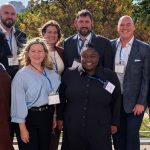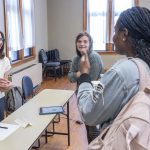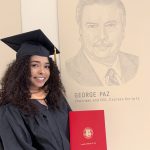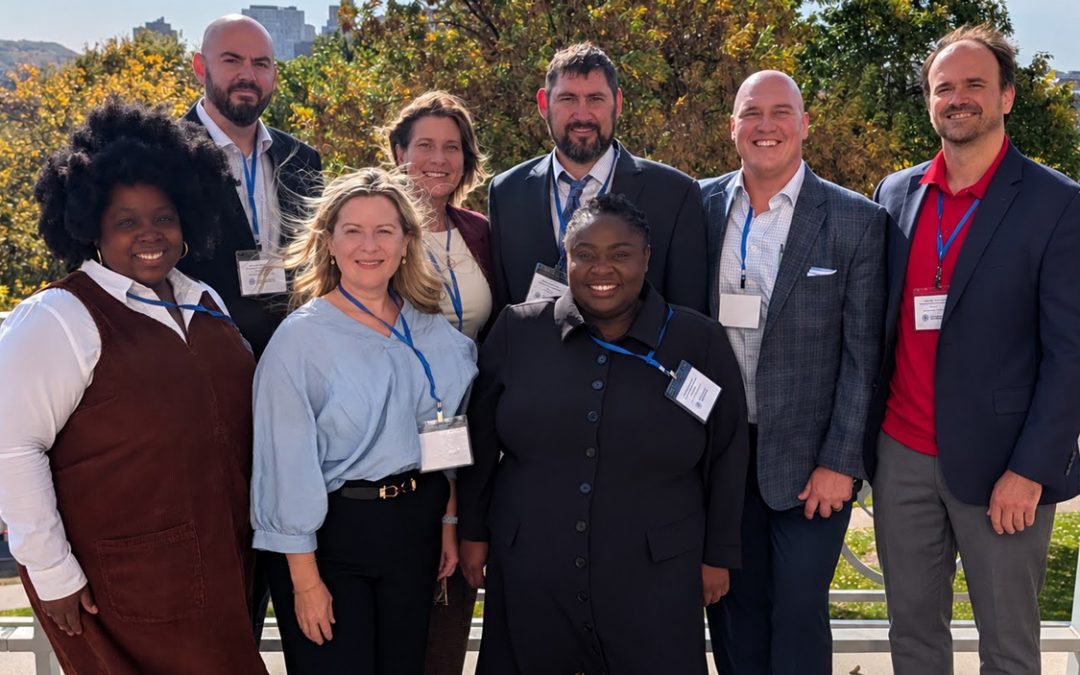
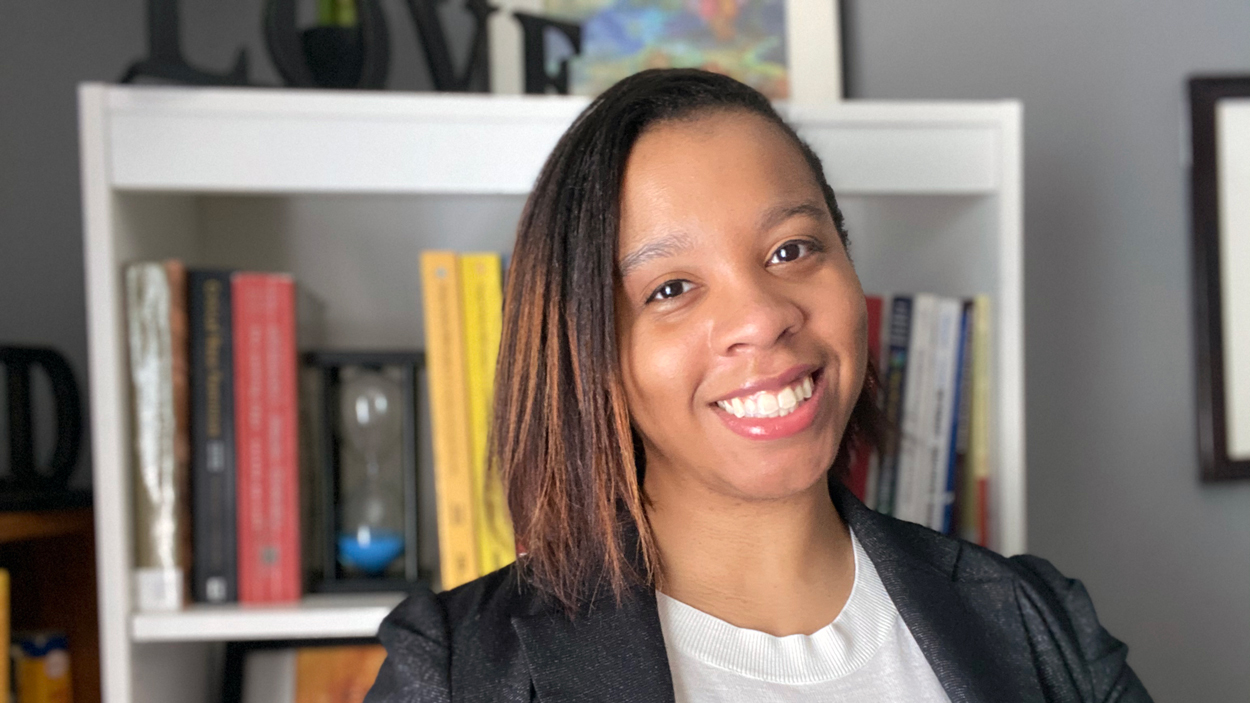
Zori Paul became a member of the North Central Association for Counselor Education and Supervision as a doctoral student at the University of Missouri–St. Louis. At UMSL, Paul won the National Board for Certified Counselors Minority Fellowship Award. She also investigated the efficacy of Parent-Child Interaction Therapy and contributed to Professor Jerome Morris’ study on the St. Louis School Desegregation Program. (Photo courtesy of Zori Paul)
Zori Paul’s history with the North Central Association for Counselor Education and Supervision goes back to her time as a doctoral student at the University of Missouri–St. Louis.
In 2020, Paul earned a place in the organization’s Emerging Leaders Program while pursuing her PhD in counseling in UMSL’s College of Education. That experience subsequently led to serving on the NCACES Graduate Student Committee and creating a role as NCACES social media coordinator, a position she still holds.
But it wasn’t long before mentors in the organization began prodding her about taking on a leadership role.
“Dr. Victoria Kress, who was the NCACES president when I was a doc student and is now the American Counseling Association president, said, ‘Hey, are you going to run for NCACES president?’ I was like, ‘What? I’m doc student!’” Paul said. “So, I had the privilege of telling her at a recent conference, ‘Hey, guess who’s NCACES president?’”
NCACES is a regional arm of the national Association for Counselor Education and Supervision. It supports counseling educators, professionals and students in 13 states and aims to advance education and supervision in the region to improve counseling services in all settings.
Paul, now an assistant professor at UMSL, was voted NCACES president-elect by the organization’s membership earlier this year. Last week, she officially transitioned from her previous role as member-at-large with NCACES Leadership to president-elect. Next summer, her one-year term as president will begin. Afterward, she’ll stay on the governing body for another year as past president.
“I really hope that we, as an organization, can continue to improve on the work that we’re doing with counselor and counselor education professional development,” Paul said.
She’s identified other priorities for the organization in the coming years, as well.
“One of the things that I and the new president, Dana Isawi, want to do is to think about how we can focus more on advocacy,” Paul said. “We are also thinking about AI and how it’s being used in terms of ethical and clinical practice or as a support for clinical practice.”
Paul’s promise as a researcher and leader in the counseling field was evident as a doctoral student at UMSL. In 2021, Paul won the National Board for Certified Counselors Minority Fellowship Award, which provides financial support to graduate students who commit to serving minority communities through research or service.
She also investigated the efficacy of Parent-Child Interaction Therapy through an assistantship with Dr. Joan Luby of Washington University in St. Louis and contributed a socioemotional and mental health perspective to Professor Jerome Morris’ study on the St. Louis School Desegregation Program at UMSL.
After graduating with her PhD in 2022, Paul took a position as a clinical assistant professor at Marquette University. She credits UMSL faculty members for fostering the mentality that made that career advancement possible.
“What was really helpful, all my professors told us as doctoral students that we are their future colleagues,” she said. “When I was graduating from the program, especially the first time around when I was looking for positions, they had really instilled into me, ‘Think as a future colleague.’ I was able to step in and say, ‘Yes, there’s still a lot of things I have to learn about this position and about being faculty, but I am coming in with my own knowledge and my own expertise.’”
Last year, Paul brought that knowledge and expertise back to UMSL when she joined the College of Education as an assistant professor of counseling. The move allowed her to devote more time to research and reconnect with mentors who shaped her development as a counselor and educator.
Now as NCACES president-elect, she hopes her new role will help shine a light on the exemplary work UMSL is doing to prepare the next generation of counselors.
“I’m just hopeful that, in the grand scheme of things, this will help to continue to spotlight the amazing work being done in the counseling program at UMSL,” Paul said. “Last year, we won two awards, the NCACES Innovative Counselor Education Program Award – master’s level – and the ACES Robert Frank Outstanding Master’s Counselor Education Program Award. So, I’m hopeful that we will continue to be rock stars and produce leaders in the field, not only in Missouri and the region, but also in the country.”