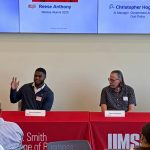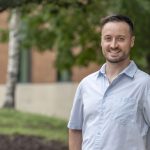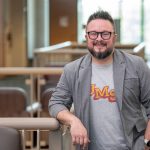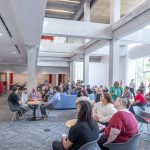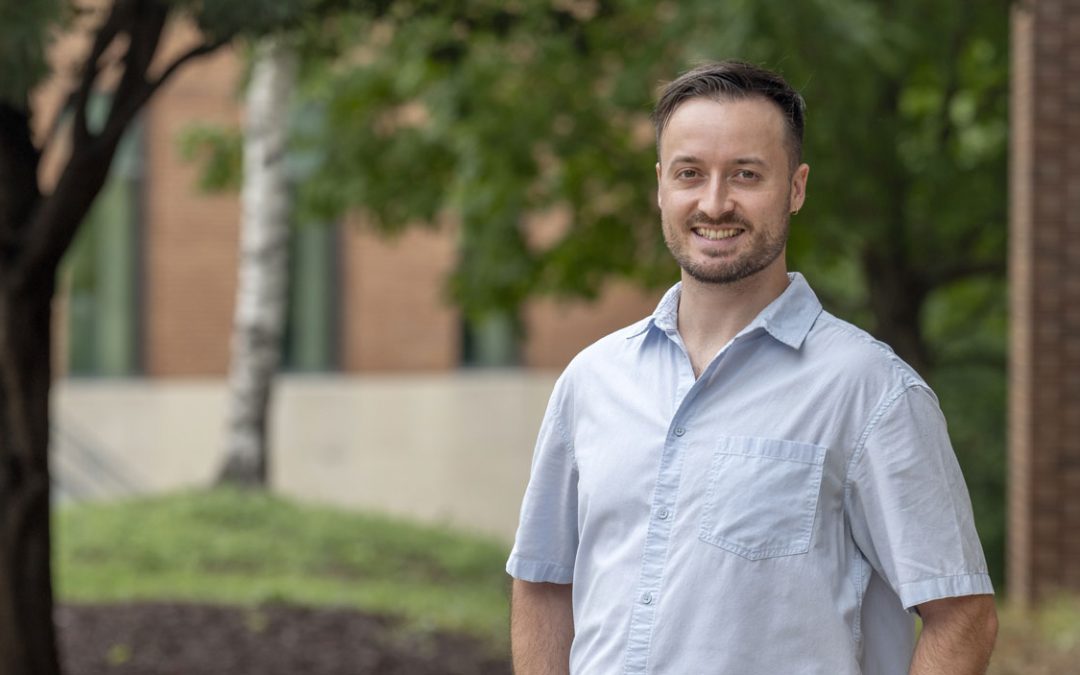
Dean Marius Boboc was among 24 leaders announced as part of the Impact Academy’s 11th cohort. During the year-long fellowship, Boboc will look to address issues from the responsible integration of AI in the classroom to strengthening partnerships between schools, families and communities. (Photo by Derik Holtmann)
Marius Boboc’s tenure as dean of the College of Education at the University of Missouri–St. Louis has been marked by his commitment to advancing the university’s mission as an anchor institution in St. Louis region.
In pursuit of that goal, Boboc has worked to strengthen strategic partnerships and support the St. Louis community through innovative, high-quality programming offered by the College of Education. A new fellowship will further that objective.
Deans for Impact named Boboc an Impact Academy fellow on Tuesday. He was among 24 leaders announced as part of the fellowship’s 11th cohort. The fellows were chosen for their commitment to preparing future teachers to meet the needs of all students amid a rapidly evolving education landscape.
The cohort is comprised of educators from institutions across the country, including public and private universities, community colleges, national programs, school districts and innovative teacher-preparation pathways. Though they come from different walks of life, they share a dedication to strengthening systems of education so that more students are taught by well-prepared teachers.
Boboc is committed to producing teachers who are ready “the first day on the job,” and he has become increasingly aware of the need to re-engage school and community partners in constructive conversations about how to strengthen schools as community anchors. Those priorities led to his interest in the Impact Academy.
“In order to support the synergistic relationship between communities and their schools, teacher educators are called to play a critical role in being innovative in terms of curricula, pedagogy and community outreach,” he said. “This is part of our mission in the College of Education at UMSL. At the same time, it informs how we invite external stakeholders to work with us on creating a better future together, supported all along the way by strong schools.”
The fellowship is designed to help leaders like Boboc prioritize evidence-based instruction, navigate their teams through continuous change, deepen community partnerships and build accessible pathways into teaching.
During the one-year program, fellows will participate in monthly cohort-based learning, receive one-on-one coaching from veteran leaders and engage in peer consultancies focused on the field’s most pressing challenges. They will collaborate to develop solutions to the complex problems faced by educators throughout the nation.
“Educator-preparation leaders are being asked to make important decisions in a moment of rapid change,” said Valerie Sakimura, CEO of Deans for Impact. “This cohort of leaders stands out for their willingness to engage in complexity with deep care for students, their learning and their futures. We’re excited to support these leaders as they meet the moment and help ensure every student is taught by well-prepared teachers.”
Going into the fellowship, Boboc will be focused on three key issues: preparing teachers who are able to build and sustain strong school-family-community partnerships; equipping teachers to responsibly integrate AI and other emerging technologies to benefit students and their respective communities; and strengthening clinical preparation through reflective practice and renewed school-community partnerships.
Lately, Boboc has made a habit of grappling with the issues facing higher education and the communities to which institutions belong. In March, CoGenerate announced UMSL as one of six winners of the Big Ideas Challenge to Reimagine Higher Education. The nonprofit recognized the potential of Boboc’s Community Learning Labs concept. The proposed initiative would embed wraparound educational and social services – degree-granting programs, micro-credentialing, job training, counseling, tutoring and youth programs – directly into trusted neighborhood spaces such as community and recreation centers.
Ideally, the Impact Academy fellowship will complement this work and build momentum for the College of Education to continue making transformative change in the St. Louis region. Boboc hopes to help his peers do the same.
Boboc’s predecessor, Dean Emerita Ann Taylor, was part on an earlier Impact Academy cohort.
“I know that we are well known to program leaders and staff,” Boboc said. “That means we can build on that reputation by collaborating with peers and mentors in this new cohort to focus on the calls to innovate teacher preparation. In turn, having access to the expertise of this amazing group of colleagues means that we can learn from their relevant experiences in effective teacher education programs across the country. Concurrently, we can support each other by finding ways to elevate the narratives of our students, graduates and community partners as we look into the future of education as foundational for the success of our society.”
To learn more about this year’s Impact Academy cohort, visit: https://www.deansforimpact.org/impact-academy-cohort11.