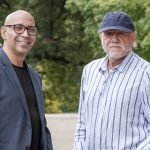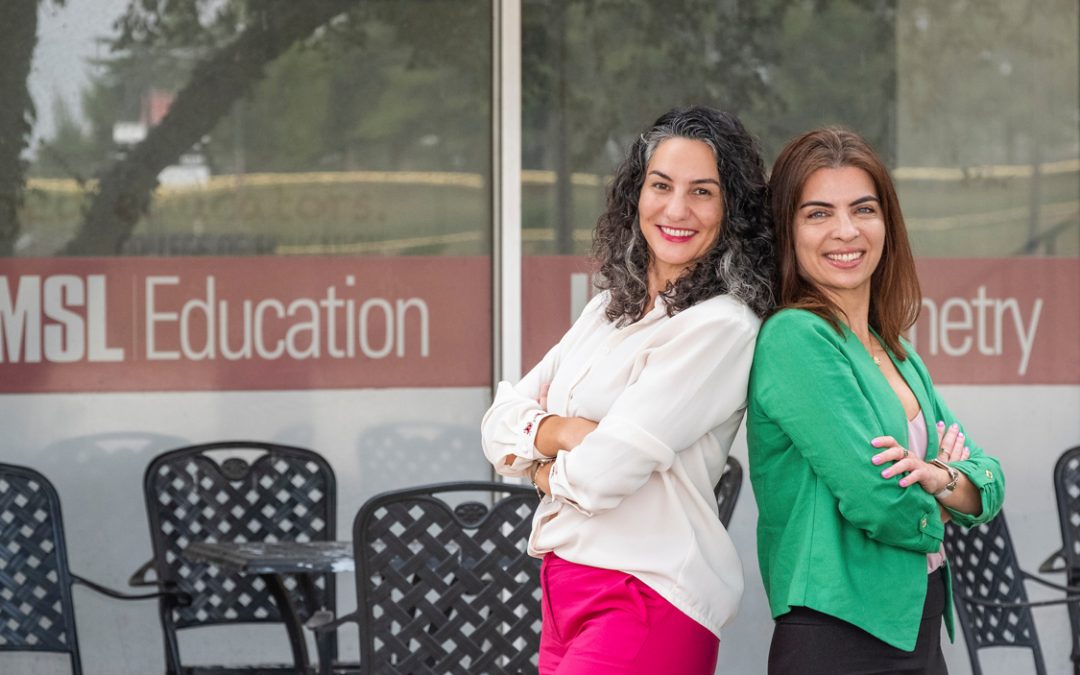
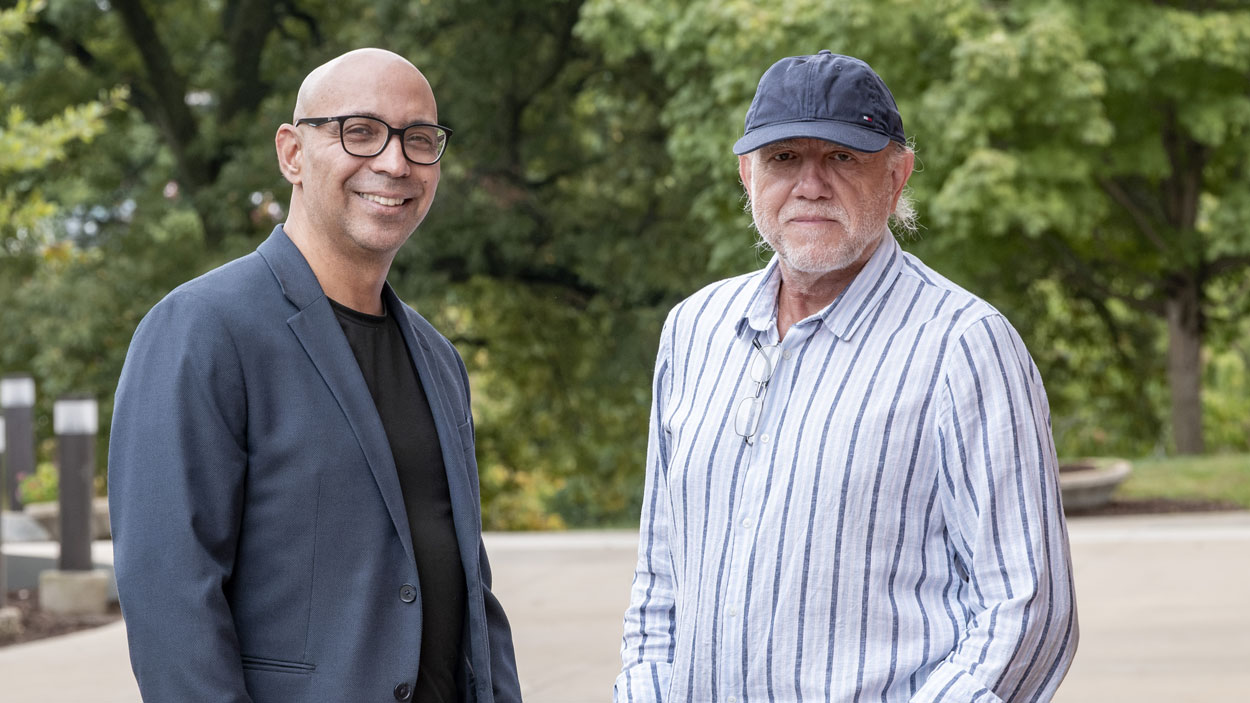
Abde Mtibaa and Cezary Janikow are working with colleagues at the University of Memphis and Old Dominion University to develop a hands-on, experiential training curriculum for high school students. It is designed to introduce them to concepts and applications at the intersection of AI and cybersecurity. The work is supported by a grant from the National Security Agency. (Photo by Derik Holtmann)
The need for cybersecurity professionals will only continue to grow in the age of artificial intelligence.
Already, there have been news reports of autonomous AI agents breaking free of their testing environments and hacking into other systems. AI companies too will face escalating pressure to ensure they’re protecting their models against outside attacks.
University of Missouri–St. Louis computer scientists Abde Mtibaa and Cezary Janikow see an urgent need to start preparing students now so they can meet the challenges of tomorrow. They’re currently working with colleagues at the University of Memphis and Old Dominion University to develop a hands-on, experiential training curriculum for high school students designed to introduce them to concepts and applications at the intersection of AI and cybersecurity. The hope is they will prepare and inspire them to pursue further education and careers in the field.
“We are creating a pipeline for a new generation of students or experts in Cyber AI,” Mtibaa said. “This is mainly for high school students and educators, and we’re going to work to get them tools to understand better the AI cybersecurity world.”
The project is being funded by a two-year, $1.5 million grant from the National Security Agency’s National Centers of Academic Excellence in Cybersecurity, or NCAE-C, program as part of its Regions Investing in the Next Generation Artificial Intelligence Initiative. Deepak Venugopal is leading the project on behalf of the Center for Information Assurance at Memphis and is the principal investigator on the grant.
Mtibaa, one of five co-PIs, said Venugopal and his colleagues at Memphis have previous experience developing a curriculum, including games and other hands-on exercises, to help expose students to complex ideas in cybersecurity. This consortium will be looking to build on that, layering information about artificial intelligence and how it interacts with cybersecurity. Students will have opportunities to learn through practical activities, experiments, projects and real-world cybersecurity scenarios.
“We want really to get their interest,” said Mtibaa, who stressed that the curriculum they’re developing will be geared to high school students and therefore will simplify some concepts. “They will understand a little bit better, so later on, when they are actually learning computer networking or math or calculus or whatever, they’ll know that that’s actually a tool that they need for this end goal. They’ll know that they’ll actually need to develop certain skills and certain expertise.”
Just as important as developing the curriculum will be testing it and getting feedback from high school students and teachers, in St. Louis, Memphis and Virginia.
“It’s the same curriculum, the same exercises, the same projects, the same thing that we’re going to fine tune,” Mtibaa said. “We’re going to test, get comments, refine, redesign, test again.”
He and Janikow have been consulting with Keith Miller, a Founders Professor in UMSL’s College of Education, to help them identify schools and educators with whom they might partner. Miller has a background in computer technology, having previously taught computer science courses at UMSL and also served as the Orthwein Endowed Professor for Lifelong Learning in the Sciences.
Janikow believes the project can serve as an opportunity to strengthen the Department of Computer Science’s engagement with area schools.
“We only need a few high schools to work with to get the feedback to develop it properly,” Janikow said. “But at the same time, we want to build as many connections with high schools as possible.”
UMSL already invites some high school students to attend its annual cybersecurity conference, STL Cybercon. This year’s event is scheduled for Nov. 13 in the ED Collabitat on South Campus.
Mtibaa expects to hold workshops in conjunction with future conferences to test different exercises and get a sense of whether they’re provided too much or not enough detail for a high school audience.
The ultimate goal is to make the curriculum, along with instructional resources, hands-on activities and best practices, available to other NCAE-C institutions and their own partner high schools to build exposure to technology and cybersecurity careers.
“UMSL is excited to contribute to this important national effort,” Mtibaa said, “and to work with our consortium partners, schools, educators and the broader NCAE-C community to expand opportunities for students.”