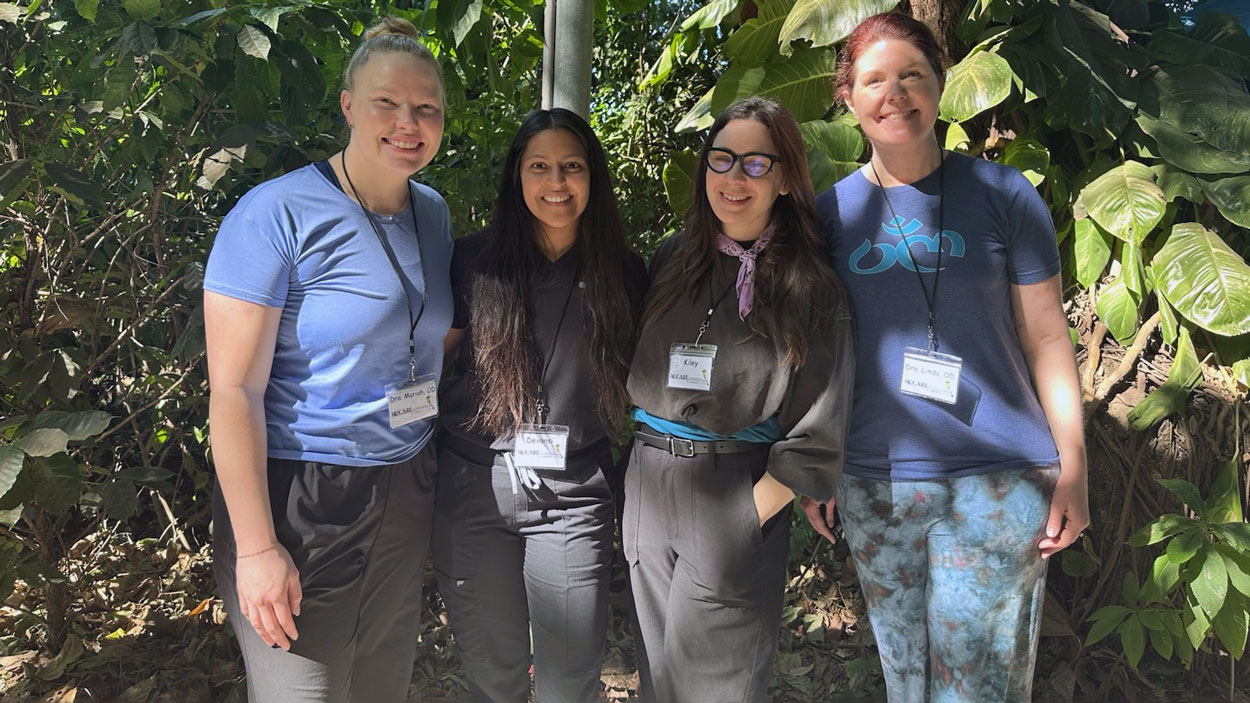
May optometry graduates Devansi Patel and Kiley Stout (center) traveled to El Salvador with 2024 grad Dr. Mariah Strahm (left) and Associate Clinical Professor Dr. Linda Marks (right) for an I Care International clinic in February. (Photos courtesy of Dr. Linda Marks)
Kiley Stout has always been drawn to the idea that healthcare can be both practical and deeply human at the same time.
“Optometry is such a unique space where you can make an immediate difference,” she said. “Someone walks in struggling, and within minutes their world can literally come into focus. That has always felt really meaningful to me.”
Stout traces her foundation in humanitarian care back to her time working as an ophthalmic technician with the Moran Eye Center’s international outreach programs before she enrolled in the College of Optometry at the University of Missouri–St. Louis four years ago. Earlier this year, when she heard about the opportunity to join I Care International on a service trip to Las Placitas, El Salvador, she felt it would be the perfect way to make a real impact on a community where access is limited.
“I care a lot about the social determinants of health, and vision plays such a big role in education, independence and opportunity,” Stout said. “It felt like a way to actually live that out instead of just talking about it while also learning from the people we were serving.”
From February 1-4, Stout and fellow fourth-year optometry student Devansi Patel joined Associate Clinical Professor Dr. Linda Marks for a clinic in Las Placitas hosted by the Rotary Club of San Miguel. Over the course of four days, the group of 32 volunteers served 952 patients, dispensing 982 prescription eyeglasses and hundreds of over-the-counter reading glasses, sunglasses and eye drops.
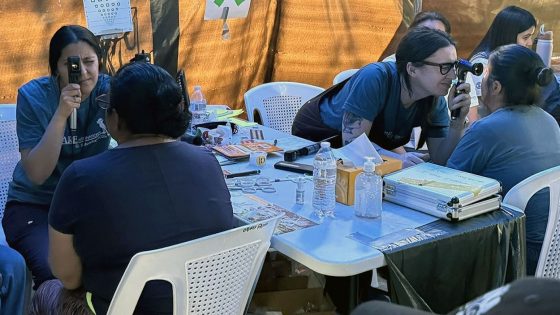
During the clinic, Patel (left) and Stout (right) performed retinoscopy to measure each patient’s refractive error and also examined the health of the retina and the front of their eyes.
At the clinic, patients first saw a nurse, who tested their blood sugar and blood pressure, then had autorefraction and vision testing before seeing an optometrist. As student doctors, Stout and Patel – who each received a $1,000 I Care scholarship to participate in the trip – helped determine patients’ prescriptions and checked the health of their eyes from front to back. If a patient needed glasses, they sent them to an optical area where they could select a pair of frames, and if they had concerns such as dry eyes or allergies, they were provided with eye drops. Any patients who needed further care were referred to an ophthalmologist, and 80 patients were able to receive surgeries from a Fort Wayne, Indiana, Lions Club clinic that visited the same region a few weeks later.
Patel said it was especially impactful to hear from so many of the patients, who were thankful that they were able to receive glasses that finally allowed them to be able to see.
“I have always wanted to do a trip abroad,” she said. “I tried to go on a humanitarian trip during undergrad, but COVID hit, and it got cancelled. I think these trips are so beneficial for these patients who struggle to get the care they need. We are so fortunate here in the U.S., having everything at arm’s reach. Most of the people we saw were traveling quite a way to get our care. I also like that the care we provided is long-lasting. The glasses that were provided will help these patients see for years.”
Patel and Stout were the only current optometry students on the trip, but they were joined by a recent UMSL alum: Dr. Mariah Strahm, who graduated in 2024 and also participated in an I Care clinic with Marks during her final year in the College of Optometry. Since graduating, Strahm and her family have moved to Texas, where she works as a primary care optometrist. She knew she would continue to find time to participate in humanitarian trips after returning from her first clinic in El Salvador in 2024, and she’ll be starting a three-year term on the board of directors for I Care International this spring.
“Trips like these truly humanize the experience of eye care and remind me of the effects that sight can have over someone’s entire life,” Strahm said. “Moreover, being part of something where people just give and give of themselves – whether it’s the people from the States who went on this trip, or the Salvadorians who graciously hosted us, or the Salvadorians who showered us with kindness – is deeply inspiring.”
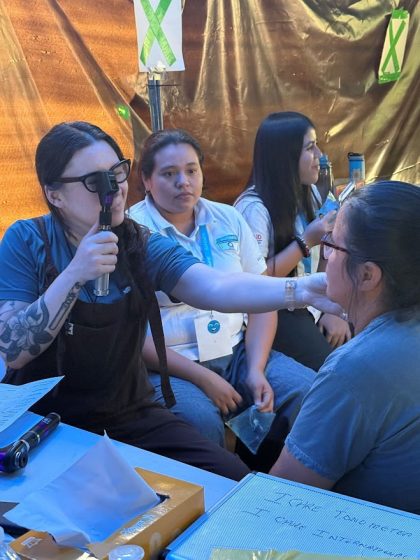
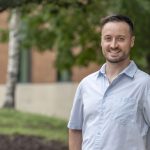
Over the course of four days, the group of 32 volunteers (including Stout, pictured here) served 952 patients.
Like Strahm, Patel and Stout both plan to continue doing humanitarian work long after they graduate from the College of Optometry next month, noting the impact that this work can have on patients’ lives.
“I am so proud of Devansi and Kiley’s hard work and the financial and scheduling logistics they worked through to attend the clinic,” said Marks. “I loved seeing them working alongside and getting to know Dr. Strahm. They were also able to learn the logistics of planning a clinic from trip leader, Dr. Jen Jacobs, my Optometry classmate (Michigan College of Optometry, 2002). It was such a fulfilling feeling for me to be a part of. We could not make these trips happen without the generous I Care donors and philanthropic organizations like Alcon Cares, the provider of 1,000 bottles of eye drops that were greatly appreciated by the patients of El Salvador.”
Stout, who will be starting a pediatric ocular disease residency at UH Rainbow Babies & Children’s Hospital in Cleveland, Ohio, after graduation, noted that humanitarian work does not always have to be international, as there is a lot of need in our own communities, too. She wants to stay involved in ways that are thoughtful and sustainable and said the trip to El Salvador reinforced for her that access to care is not equal, and that even small interventions can make a real difference in someone’s day-to-day life.
“It really felt like the care we were providing was needed and appreciated,” she said. “At the same time, I felt like I was getting just as much back in terms of perspective, connection and trust. It never felt one-sided. You could see how much it mattered to people; not just in what we were doing clinically but in the way they engaged with us. That left a bigger impression on me than any single moment.”