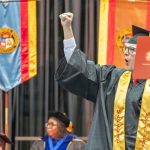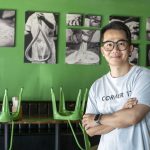
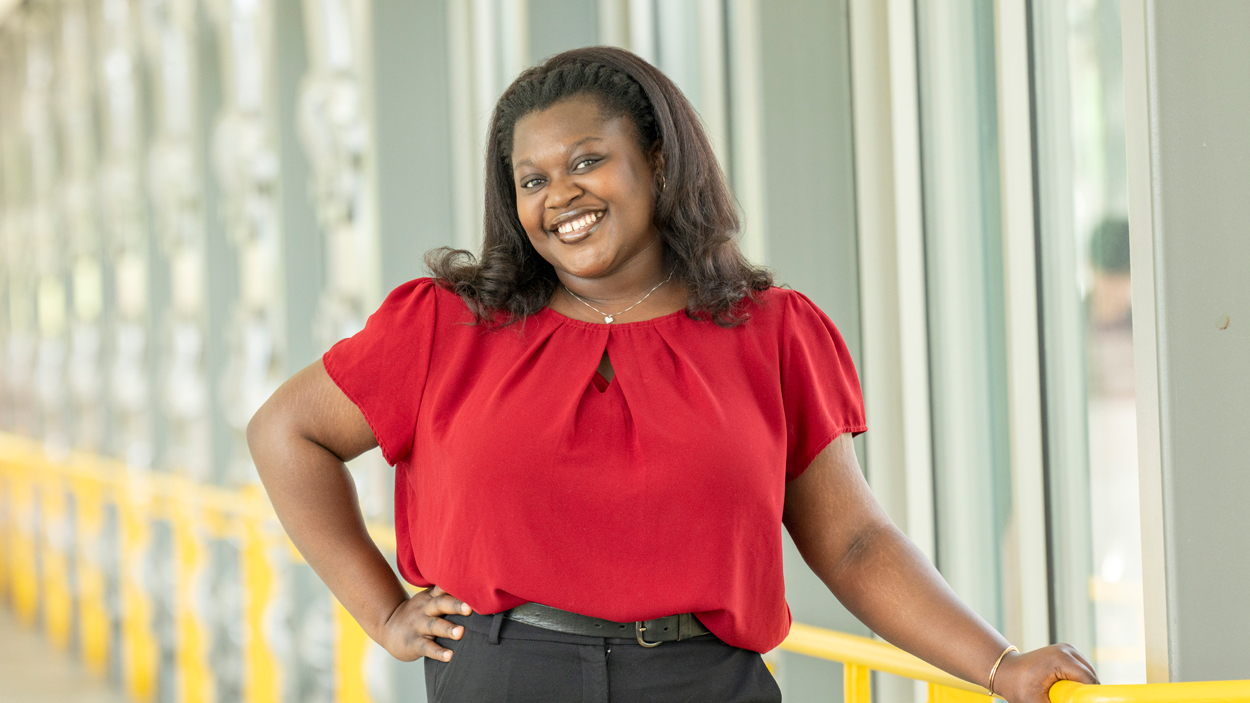
Oyinkansola Inioluwa Abejide, a native of Lagos, Nigeria, recently earned a master’s degree in supply chain analytics from the University of Missouri–St. Louis. (Photo by Derik Holtmann)
When she first arrived at the University of Missouri–St. Louis, Oyinkansola Inioluwa Abejide was not entirely sure that she was in the right place. About 16 months later, Abejide can declare without hesitation that she found her community.
“As they say, once a Triton, always a Triton,” said Abejide, who recently earned a master’s degree in supply chain analytics from the Ed G. Smith College of Business.
That confidence wasn’t nearly as strong in January 2025.
A few months after earning a bachelor’s degree in business administration with an emphasis in marketing from the University of Central Arkansas in December 2023, Abejide moved to St. Louis for a job as the marketing coordinator for dining services at Washington University in St. Louis. Given a behind-the-scenes view to the successful operation of a major facility, Abejide said she gained a deep respect for the importance of the supply chain in both the strategic and daily operations and decided to pursue a master’s in the field.
Abejide said she had heard great things about the program at UMSL, and with her supervisor also recommending the university, she decided to give it a shot. But for Abejide, who had originally moved away from her home in Lagos, Nigeria, in 2020 to major in art and study photography, doubts were really starting to settle in before she had even entered her first graduate class.
“I was so nervous coming to UMSL,” she said. “The supply chain analytics territory was new waters for me. I came to the United States to get my degree in art and photography. So there were definitely moments of, ‘What am I doing here? Am I making the right decision? Am I going to do well in this? Am I wasting my time?’”
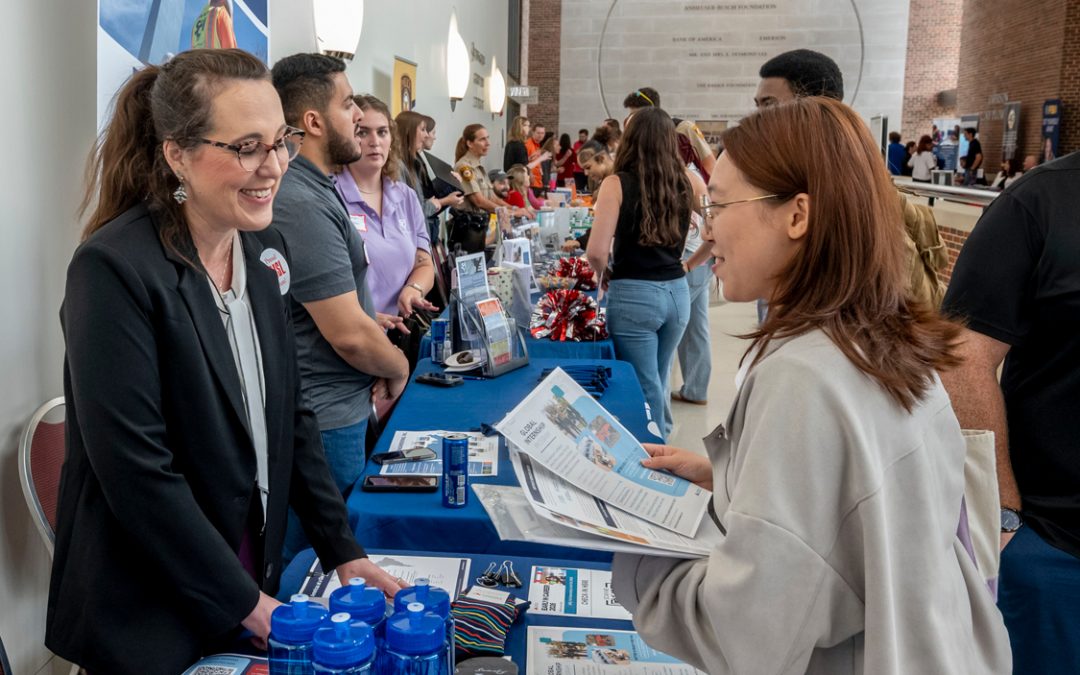
That nervousness initially began to fade during Spring 2025 Global Welcome orientation, as Abejide heard about all of the resources available to her at UMSL. Accompanied by the “overall love and welcoming feel” that greeted her as an international student, Abejide said UMSL had made the perfect first impression.
“I remember thinking that I didn’t feel this much support during my undergrad days,” Abejide said. “So, the fact that I felt safe here, that was enough to know that, OK, I am in the right space.”
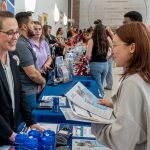
That feeling was only amplified at the Spring 2025 Supply Chain Welcome Event held by the supply chain analytics department early in her first semester. As a new person on campus who had yet to form any relationships, Abejide said she went to the event hoping to find ways to be involved, but she got more than that. While listening to remarks from Professor and Department Chair Haitao Li, along with other faculty members such as Temidayo Akenroye and Jill Bernard Bracy, Abejide said she was genuinely moved by the support and enthusiasm she encountered that day.
“You can tell when someone is passionate about what they do,” Abejide said. “Just hearing how much passion, how much love, how much interest and dedication they had toward this supply chain industry, it definitely made me intrigued, and it made me realize that, ‘Oh wow, I am surrounded by masters of the field,’ who just genuinely want students to learn and grow and support them. And that for me was everything.”
That same day, Abejide also heard some inspiring words from Kabita Rokka, then the president of UMSL’s Supply Chain and Transportation Club, who touted the efforts of the club to create a sense of collaboration among supply chain students and professionals. Abejide soon became a member of the club, and she also accepted Li’s invitation to become a graduate assistant, primarily focusing on the department’s marketing and communication needs.
“Ini struck me as somebody who didn’t realize her own potential when she came here,” Li said. “But Ini has always been so diligent, so professional, she was always able to deliver such high-quality work, and you could just see her gradually building more confidence, more professionalism through her communication with our industry partners.”
But for Abejide, the experience at UMSL was always about more than professional growth. She said she had long been searching for an environment built on encouragement, connection and mutual support, and she ultimately discovered that within UMSL’s supply chain program.
“I believe I was definitely meant to come here,” Abejide said. “My whole thing in life is I just want to be able to leave an impact wherever I am, and I want to be able to give back, because isn’t that the whole point? I mean, it’s not just about us as individuals, right? It’s about helping others if you can, not for any transactional gain, but just because at the end of the day, we all need each other to push each other forward. And I knew I wanted to do that here at UMSL.”
That’s largely why about a year ago, Abejide decided to break out of her comfort zone and put her name in consideration for club president, a role that she carried for the 2025-26 academic year. She also took on an internship that started in February with the Eastern Missouri Alliance for Clean Transportation, a U.S. Department of Energy-backed Clean Cities and Communities coalition focused on advancing clean transportation and alternative fuel solutions across Eastern Missouri. Abejide said she has been the accelerate intern, doing everything from stakeholder engagement to marketing to data collection, all toward the goal of getting Missouri to a cleaner state.
“I think Ini’s experience is going to inspire many students, many people,” Li said. “She’s that perfect example of, ‘You don’t know until you try,’ and she should be commended for taking those risks, taking those chances.”
Abejide said she is optimistic that all of that hard work will lead to a career opportunity. And she is confident that UMSL will continue to provide whatever support she needs.
“UMSL doesn’t end the relationship with its alumni after they graduate,” she said. “They continue to foster those connections, and they’re still in communication with them, years down the line, and I think that’s why the school is what it is.”